4 hr
Ancient Appian Way & Aqueducts E-Bike Adventure
Pedal through 2,300 years of Roman history on electric bikes, exploring ancient roads, underground crypts, and monumental aqueducts.
Reserve
Hand-picked by our editors — only the best 5 e-bike experiences from 47 reviewed.
Verified partners for every tour, free cancellation where available, and instant confirmation on every booking.
4 hr
Pedal through 2,300 years of Roman history on electric bikes, exploring ancient roads, underground crypts, and monumental aqueducts.
Reserve
3 hr 30 min
Electric bike journey through ancient Rome's countryside, exploring catacombs, aqueducts, and ruins.
Reserve
4 hr
Pedal through 2,300 years of history on Rome's legendary ancient highway and aqueduct parklands
ReservePrices from verified partners. Availability updates in real time at checkout. Free cancellation policies apply where shown.
The landmarks, rooms, and views travelers on this tour remember — all visible on a single visit.
This massive circular tomb sits atop a hill and was once converted into a defensive fortress in the 13th century. It remains an iconic landmark on any route.
This is the most well-preserved ancient Roman chariot racing stadium, featuring visible foundations of the starting gates. It dates back to the 4th century AD.
These underground burial galleries stretch for miles and house the remains of early Christian popes and martyrs. They are a essential part of the history along the route.
The ruins of this massive luxury estate reveal how wealthy Romans lived, with preserved thermal baths and sprawling gardens overlooking the countryside.
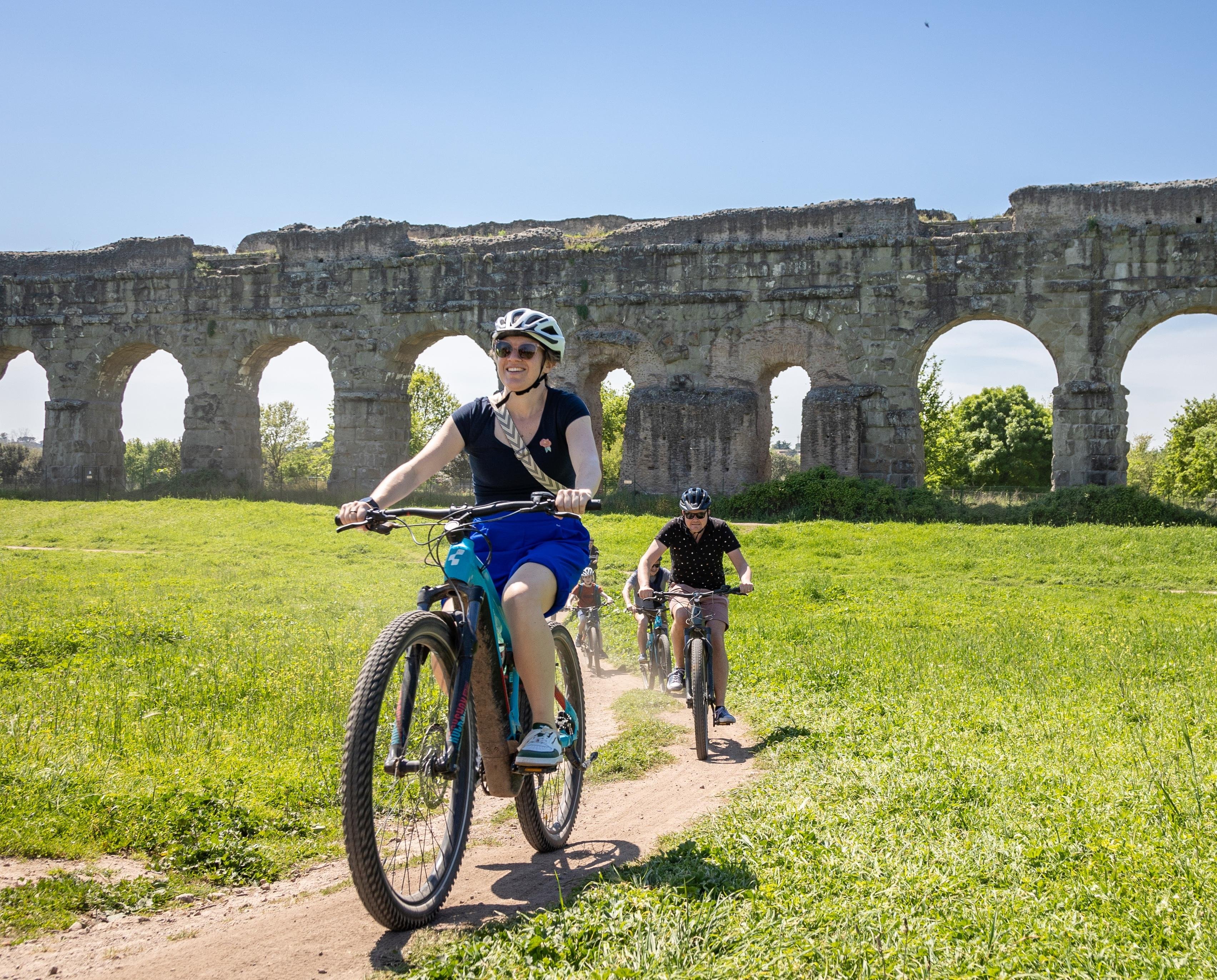
This area features soaring stone arches that once carried water across the Roman landscape. It is a stunning visual example of ancient engineering.
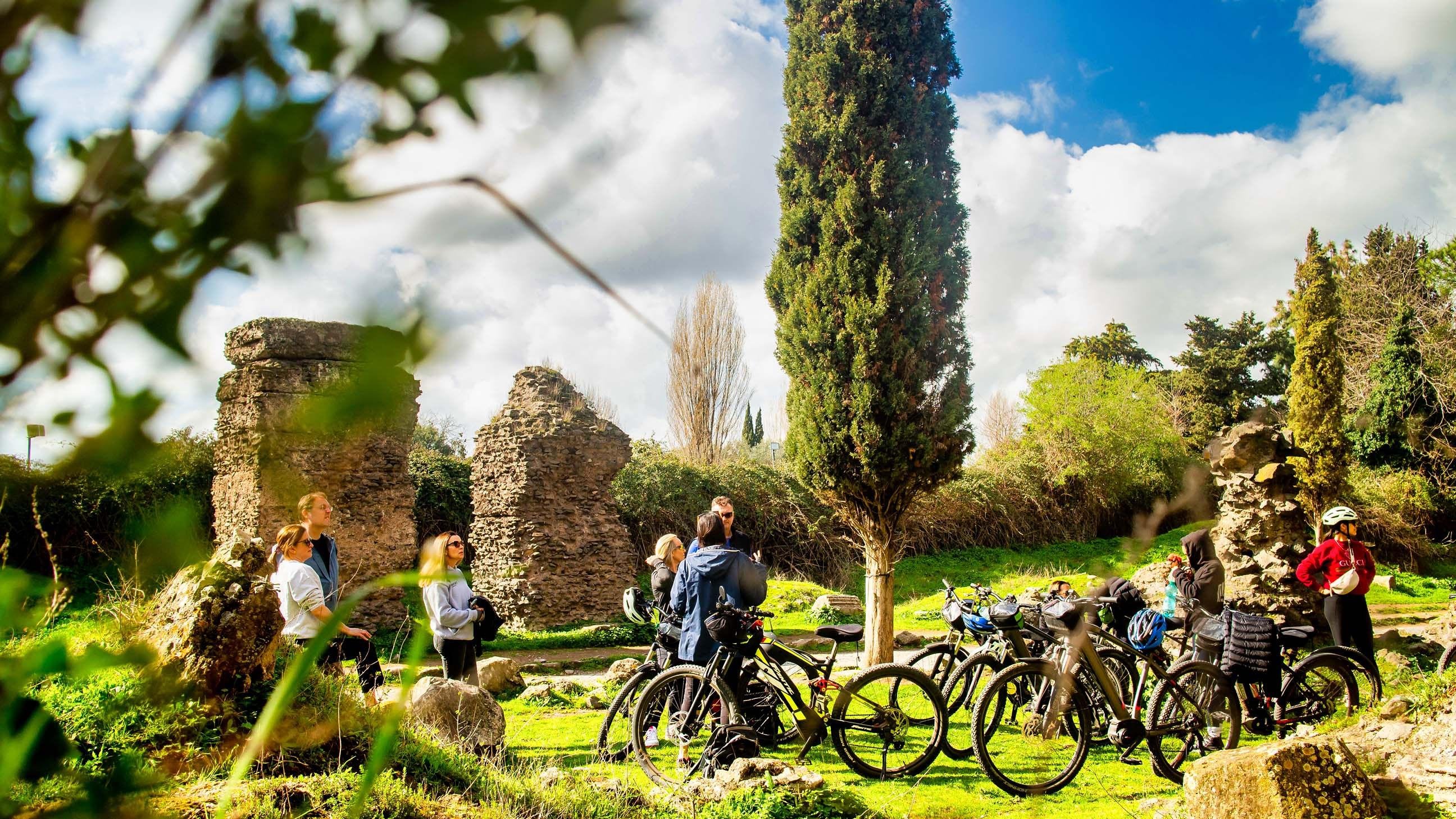
Professional tours provide structured navigation and rich historical narration, while self-guided cycling allows for personalized pacing across the ancient stones of the Via Appia Antica.
| Feature | Top pick Guided Bike Tour | Self-Guided Cycling |
|---|---|---|
Navigational support |
Professional guide included | Maps or GPS required |
Access to catacombs |
Priority entry options | Standard queue wait times |
Physical effort |
E-bike options standard | Depends on rental type |
Historical context |
In-depth expert commentary | Personalized guidebook reliance |
Flexibility |
Fixed departure schedule | Complete route freedom |
Cost |
Premium tour pricing | Rental fee plus entry |
| See tickets → |
Verdict: Opt for a bike tour rome appian way tour if you prioritize depth of knowledge, or choose self-guided exploration when you want to discover the Appian Way landmarks at your own pace.
Choose your ticket, select your date, and reserve in under two minutes. Secure checkout handled by our verified partner.
Instant confirmation by email, with a mobile voucher you can save offline. No printing, no queuing at a collection desk.
Arrive at the entrance, show your voucher on your phone, and walk in. Most tickets include priority or skip-the-line access.
Practical details for your visit straight from our verified partners — hours, access, rules, and how to get there.
Modest dress is required for catacombs and churches; ensure shoulders and knees are covered.
Small backpacks are allowed for your bike tour rome appian way. Secure storage is not provided at the park office.
Photography is permitted throughout the outdoor park areas, but restricted inside catacombs and private tomb sites.
The ancient cobblestones are challenging for standard bikes, so e-bikes are recommended for a smoother bike tour rome appian way experience.
Mobile phone use is encouraged for GPS navigation and accessing digital maps for your bike tour rome appian way.
Child seats, trailers, and kids' bikes are available for rental to make your bike tour rome appian way family-friendly.
Cafés are located near rental points; carry a reusable water bottle as refills are available at fountains along the bike tour rome appian way route.
Well-behaved dogs are welcome in the park on a leash, though they cannot enter catacombs or monument sites.
Stay on marked dirt paths whenever possible to bypass the uneven, 2400-year-old original basalt paving stones.
Best time to go, insider tips, nearby landmarks, and the cancellation fine print — flip through to skim what matters to you.
Flexible, no hidden fees.
Bookings for any bike tour rome appian way require cancellation 24 hours in advance for a full refund. Entrance to the park is 0 EUR, but tours often include admission fees for specific monuments.
The Via Appia Antica, commissioned by Censor Appius Claudius Caecus in 312 BCE, stretched 350 miles from Rome to Brindisi and served as the main artery for military legions, trade caravans, and the empire's first postal relay system. Its basalt paving stones, polygonal and tightly fitted without mortar, still bear the rut marks of chariot wheels, and its route was deliberately engineered to bypass marshland and climb ridge lines with a gradient gentle enough for laden ox-carts. The road carried Saint Paul to his trial, witnessed Spartacus and six thousand crucified rebels lining its shoulders in 71 BCE, and hosted the grandest funerary monuments outside Rome's walls — marble tombs for senators, columbaria for freedmen, and the circular mausoleum of Cecilia Metella, whose travertine drum rises thirty meters above the basalt. Today the Parco Regionale dell'Appia Antica protects a fourteen-kilometer stretch between the Porta San Sebastiano and the Casal Rotondo tomb, prohibiting motor traffic on Sundays and preserving the landscape of umbrella pines, wild fennel, and collapsed aqueduct arches that defined the Roman Campagna for two millennia. The park's stone-paved surface is uneven and demanding for walkers but ideal for e-bikes, which absorb the vibration while maintaining the pace needed to cover the catacombs of San Callisto, the aqueduct viaducts of Aqua Claudia and Aqua Marcia, and the villa ruins scattered across the pastureland. Cycling the Appian Way reveals the road's original logic — its long sightlines, rhythmic milestones, and the way tombs cluster near crossroads while villa complexes retreat into orchard groves. The road's surface varies: the first three kilometers preserve original Roman paving, sometimes crowned and sometimes subsided, while later stretches alternate between exposed basalt, gravel overlay, and tufa bedrock where the paving was quarried in the medieval period. Most bike tour Rome Appian Way routes begin at the Porta San Sebastiano, where the Aurelian Walls frame the road's exit from the city, and proceed southward past the Domine Quo Vadis chapel, the Circus of Maxentius with its intact spina foundations, and the Jewish catacombs at Vigna Randanini before reaching the aqueduct park near Via di Tor Carbone. The landscape is deceptive — Rome's urban edge remains visible on the eastern horizon, but the road's corridor, sunken between tufa cuts and tomb facades, feels archaeological and separate. Early morning light slants across the basalt, picking out the fossils of volcanic glass embedded in the stone, and the umbrella pines cast shadows precise enough to function as sundials.

"Its basalt paving stones still bear the rut marks of chariot wheels, polygonal and fitted without mortar."
A step-by-step walkthrough of the visit — what you'll see, how long each stage takes, and the details that matter.
You collect your e-bike near the Baths of Caracalla or the Porta San Sebastiano gate, adjust the pedal-assist level to mode two, and roll onto the basalt pavement as the Aurelian Wall recedes behind you. The first kilometer is cobbled and shaded by stone pines, the road flanked by brick tomb facades and the low ruins of columbaria, their niches still visible in the masonry. You pass the Domine Quo Vadis chapel, barely larger than a sentry box, and continue to the Circus of Maxentius, where you dismount to walk the gravel path around the spina — its obelisk base and turning posts still anchored in the tufa. The route opens into pastureland after the third kilometer. The road surface smooths to gravel overlaid on basalt, and the aqueduct arches of the Aqua Claudia appear on the left, their brick vaults spanning the fields in rhythmic repetition. You pedal beneath one arch, then another, the electric motor absorbing the grade as the road climbs toward the Casal Rotondo tomb. At the aqueduct park intersection you pause — the Aqua Marcia and Aqua Claudia converge here, their double-tiered arches framing the Via Latina in the distance. The return leg follows the same basalt, now warmed by midday sun, past cyclists pausing at the San Callisto catacombs entrance and families picnicking in the shadow of Cecilia Metella's drum. You coast back through the gate as the Baths of Caracalla come into view, the e-bike odometer reading fourteen kilometers.
The park operates from 09:30 daily, with extended weekend hours until 19:00 for your bike tour rome appian way.
Yes, the park offers child seats and trailers for families participating in an Appian Way tour.
Yes, you should reserve your bike tour rome appian way tickets in advance to ensure availability.
Bring water, sunscreen, and a camera for your Appian Way cycle experience.
Many operators include these in their bike tour rome appian way packages, though some charge separate fees.
Entrance to the park is 0 EUR, though monuments may have individual fees for your Appian Way tour.
Most cycling experiences last between 3 and 4 hours depending on the chosen bike tour rome appian way route.
The terrain is uneven; we recommend e-bikes for the best experience on your bike tour rome appian way.
We suggest arriving between 09:30–12:00 to avoid the afternoon peak heat.